-
Home Again
Our trip to my erstwhile home was surprisingly placid this year. There were no hiccups and, for the most part, everything ran smoothly. We arrived home at 10:18 AM on Thursday and, in entering our building, noticed a faint smell of smoke, as if someone had left the toast in for too long. We thought nothing of it, until this morning when a friend sent this photo and asked if we were okay:
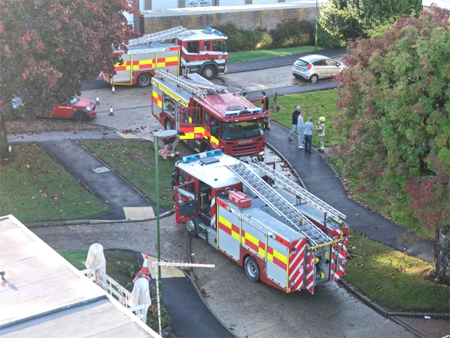
Yeah, that’s our block of flats Turns out, there was a fire in one of the flats and three fire engines were on site and all the residents had been evacuated. This photo was updated to the local news at 10:10 AM, so it was probably taken a little before that time. Even so, eight minutes later, our taxi dropped us off and we were none the wiser. Had we arrived home half an hour earlier, we might have been in for a shock.
But, in keeping with the rest of our journey, there was little drama. For me, travel is a bit like visiting the dental hygienist: I dread it, and when it is happening it is uncomfortable and demeaning, but when it’s over, I look back and think, “That wasn’t so bad.”
I did, however, note some interesting juxtapositions during our visit, such as the taxi rides to and from the airports:
Our taxi ride from Penn Station to Newark Airport was a 14-mile, white-knuckle journey that took over an hour and cost $177 (or £132), including tip, while the 44-mile trip from Heathrow to Horsham took under an hour and cost £120, including tip. I must admit, though, that although the London cab was more comfortable, the NYC cab ride was more exciting, and now my wife can say she’s ridden in an authentic Yellow Cab.
Upon reaching the Capital Region, I went to pick up my rental car. Long story short, I reserved a Mitsubishi Mirage, but what I got was a pickup truck. It only took me 12 of the 14 days I had it to learn how to park it.
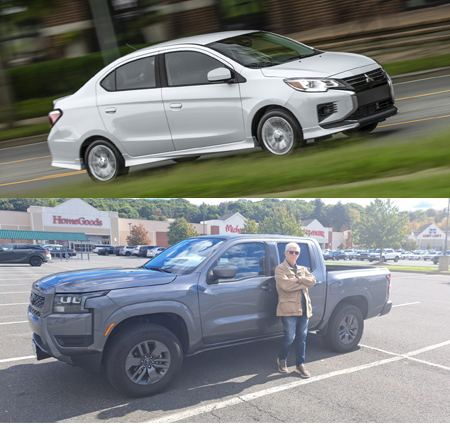
Top: what I ordered
Bottom: what I gotAnother cultural difference I noticed, after all these years, is the insouciance regarding restaurant availability. My wife and I won’t even go to Pizza Express without making a reservation (and, indeed, we have been turned away for not have done so), yet my son thinks nothing of fetching up with a party of seven, expecting to get a table, and succeeding.
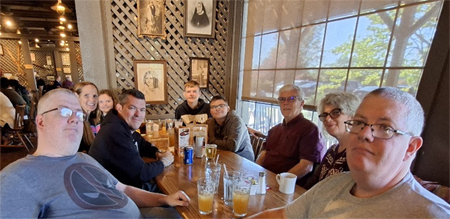
All nine of us at Cracker Barrel, without a reservation
Extreme L & R: the Twins
L Front to Back: The Boy, my DIL, The Girl
R Back to Front: Eldest, Middle, Me, My WifeWhen visiting America, we stay with my bachelor son, who has rented a two-bedroom apartment specifically to accommodate us. (He’s a good son.) We live in his second bedroom, which is much larger than ours, for two weeks of the year. When we leave, we close the door; a year later, when we return, we open it, and find it exactly as we left it. We’ve even taken to leaving clothes and other necessities—like electrical adapters—there. It’s sort of like a timeshare that we don’t have to share with anyone.
Despite his hospitality, the main event is visiting the grandkids, whose house is too crowded and frenetic for us to want to stay there. But we impose on them frequently, and this year we had quite a surprise in discovering that the G-boys were both taller than us.
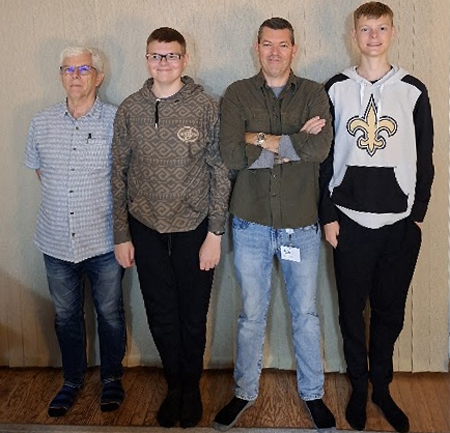
Me, the Middle child, my Boy, the eldest The first-born has shot up to 6ft tall. I have no idea where he got that from, as we are a short family. I’m only 5’5″ and his dad is only 5’7″. The middle child is also taller than me, but not his dad. The Girl is tall for her age but, at least for now, I do not get a crick in my neck when I talk to her. Strange seeing them all so grown up; last I knew, they were toddlers.
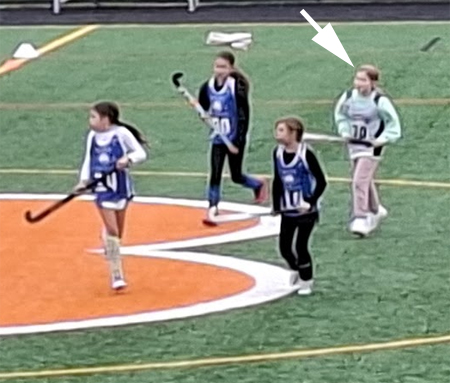
The Girl playing field hockey What we mostly did, aside from visit the G-Kids, was walk. We did three more sections of the Empire State Trail and made two visits to the Wilson M. Powell Wildlife Sanctuary to admire the views from the overlook. Much to my chagrin, I was unable to locate the Overlook on our first attempt, but I managed to talk my wife into a return visit to try again, and we had better luck the second time.
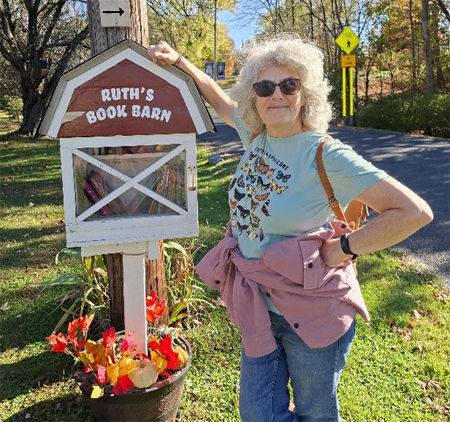
Along the Nassau Lake to Reno Road portion of the Empire State Trail, we came upon a mini-library; if we had known, we’d have brought some books 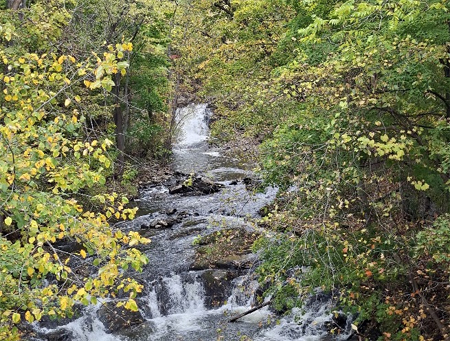
The Valatie Kill along the Niverville to Valatie portion of the Empire State Trail 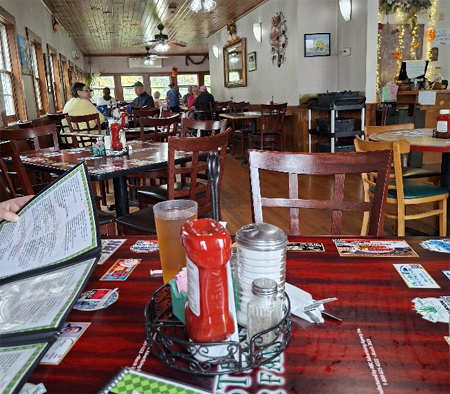
That portion also includes The Main Street Café in Valatie, quintessential Americana 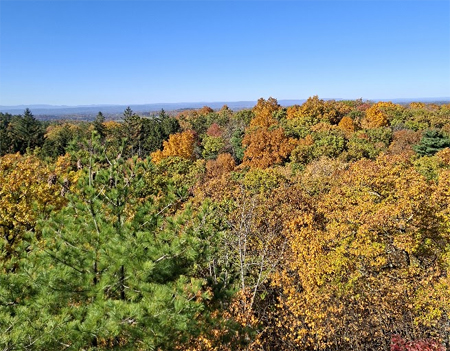
The view from the Overlook; second time lucky One of the things I was keen to do on this trip was make a final pilgrimage to my childhood home. My father bought it in 1953 for $7,000. The Step-Monster lived in it until last year or so (I didn’t stop to visit) but I found it in a real estate listing some months back, at an asking price of $130,000. With the house now empty, I figured I should go and take a commemorative photo. Before going, I wanted to be certain it hadn’t been sold yet, so I double-checked the listing to make sure it was still there. It was, and so, we went.
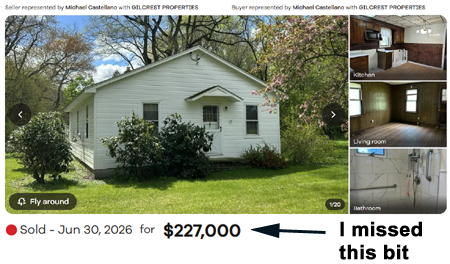
SPOILER ALERT “Are you sure it’s empty?” my wife asked, as I pulled the pickup truck into the driveway.
“Of course.”
“But there are lights on.”
“Security,” I said, getting out and walking confidently to the patio.
“Inside the house?”
“Extra security. Come on, take my photo.”
I sat on the back steps to recreate a photo taken in 1956.
“There’s a sewing machine on a table. I can see it through the window. And a baby’s sippy cup is sitting next to it.”
“But it hasn’t sold yet.”
“Maybe it’s being rented,” she said, snapping a few quick photos.
“It must be old stuff. I can’t imagine—”
“There are Halloween decorations and pumpkins on the porch!”
We got away without being arrested for trespassing, and I got my photo so, no harm, no foul. And I learned that, although you can go home again, you might find someone else living there.
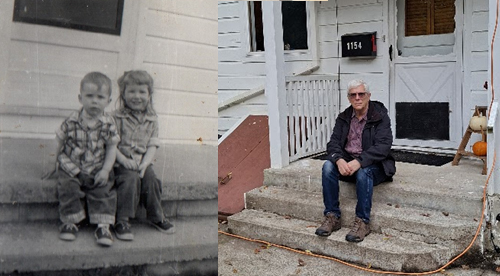
L: Sitting on the back steps of my home, with my sister, in 1956
R: Sitting on the back steps of someone else’s home, 2026More Photos
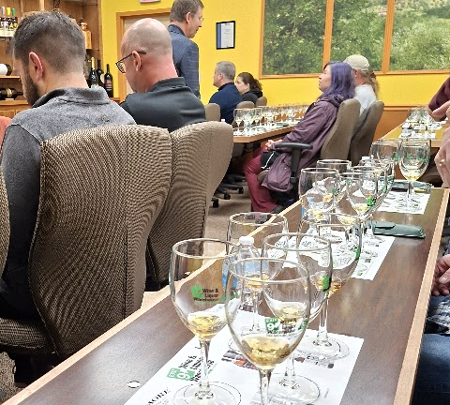
A whiskey tasting with my son; very entertaining 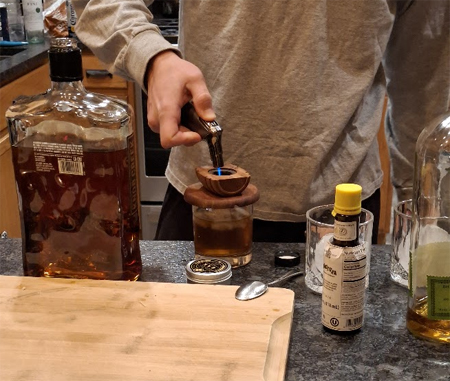
Smoking whisky at my buddy Carl’s house; very tasty 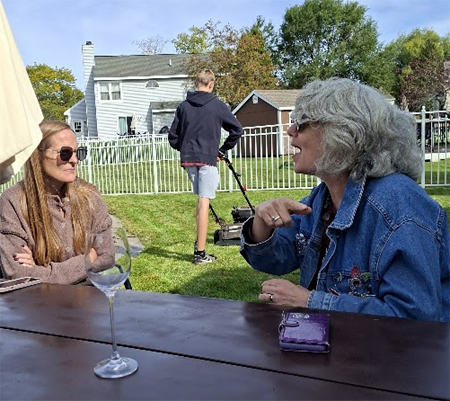
The Girls relaxing while the Boy mows the lawn 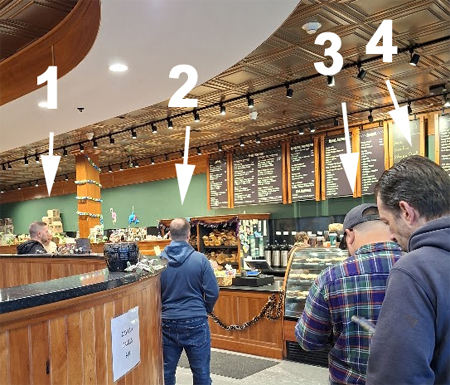
The queue at our favourite coffee bar was always long, but that’s because American’s don’t know how to queue 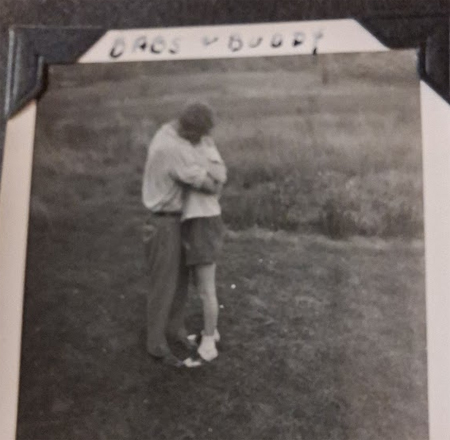
We visited my cousins and they had some old family photos, and one of my mom and dad I had never seen before 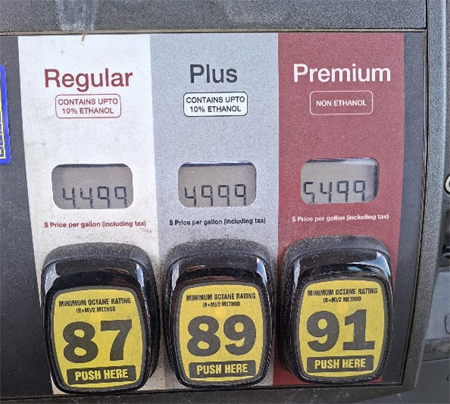
One of the things I got a kick out of was pointing to the gas pumps and saying, “Wow! Your gas is really cheap!” Where I live, it’s closer to ten dollars a gallon 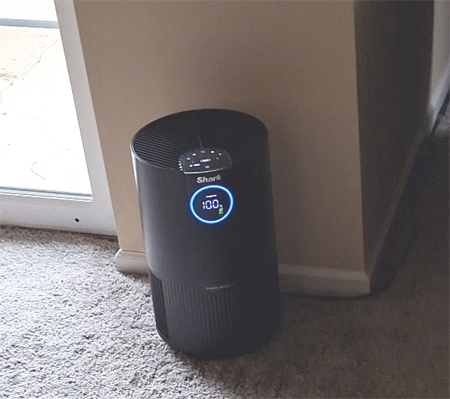
I was afraid my son’s Alexa was listening to our conversations until my wife pointed out that this was an air filter 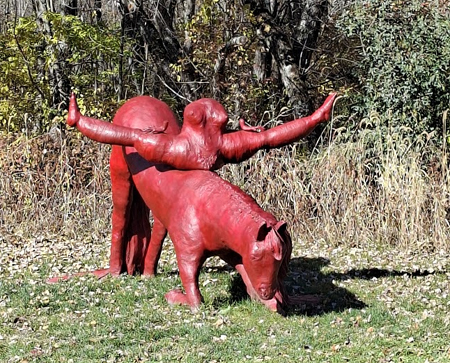
On our final day, we visited Art Omi, which is out in the middle of nowhere and consists of a maze of fields with weird shit in them; a must see 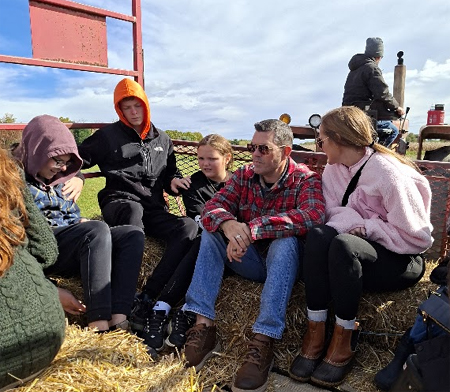
Taking the G-Kids pumpkin picking; I wonder how much longer they are going to want to do this