Through a Glass Darkly
For now we see through a glass, darkly …
1 Corinthians 13:12
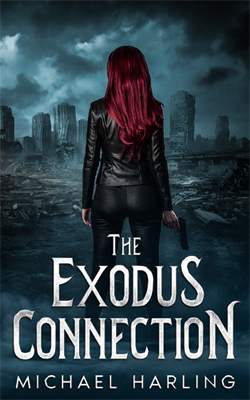
Having finally finished The Exodus Connection, I was looking forward to getting seriously stuck into The Body in the Reed Bed with my new heroine Penny Hawkins, a warden at the Dowerton Reserve and Conservation Area, that I hope to make into a series in a desperate attempt to establish a brand.
However, before I got too far, I hit upon the idea of having another look at The Brighton Virgins, the novel I wrote before Finding Rachel Davenport. It was my first UK novel, and I recall working on it for quite some time, and actually acquiring an agent for it. Two, in fact. The first was an elderly woman who I have practically no memory of outside of a lunch in London where I discerned that she really didn’t know what she was doing.
In 2009, I was contacted by Erin, a NYC agent recently relocated to London. (I had a more prominent web-presence back then.) I met her for lunch, because lunching with agents is what we authors do, and she seemed to know what she was doing. She liked my stuff and we kicked The Brighton Virgins around for a year or so before one of us (probably me because I’m bone lazy) decided that making it publishable would be too much work, and concentrated on Finding Rachel Davenport instead. Erin thought that had more potential, so we kicked that around for a while until she thought it was presentable. Then she disappeared.
Six months went by. I sent a few emails asking about progress. *crickets* So, I placed it with a publisher myself, moved on, and never heard from her again. (A quick search informs me she is now vice-president of Folio Literary Management, so maybe I should have waited a little longer.)
Anyway, acting on my impulse, I found a 2010 version of The Brighton Virgins in my files and uncovered a variety of pleasant surprises. (This is the reference to the title of this blog, my looking into the past as through a glass, darkly, not what the scripture actually means.)
The first was, I did not write the book in 2008-9 as I had supposed, but began it in 2004, a mere two years after settling in the UK, which explains the copious references to how different the UK is compared to the US, half of which will need to come out as they really grate on your nerves after a while.
Also, the version I found had a page of Erin’s notes attached to it, containing a list of what was wrong with the novel. Reading that list, I can understand why I abandoned it, but sixteen years later, being a more experienced writer (though, not necessarily a better one) I feel I can easily make those corrections. And finally, and most surprisingly, it’s a good novel (Erin even says so in her notes), and not the piece of shit I remember it as.
It’s also about religious extremism and has a female protagonist (Alex Marsh, who also figures prominently in Finding Rachel Davenport). But where did the plot come from? I have no idea.
The only thing I recall about the story was the initial inspiration, which was slitting someone’s throat with a cigarette filter, something I learned during my time at The New York State Division of Criminal Justice Services. Somehow, a plot formed around that idea and, in the end, I never used it. My protagonist, however, needed to be a woman because religious zealotry generally involves subjugating women, so I can believe that choice was forced on me.
And then I thought about Finding Rachel Davenport, another woman protagonist. But since Rachel was a real person, and it was her business card that inspired the novel, having a woman protagonist was, once again, the only option.
The Talisman, of course, is about two boys—Mitch and Charlie—and their time-traveling adventures. However, in almost every book, a major character, one who drives the plot and is often the hero of the tale, is a woman. In fact, the climax of the entire series, where the fate of the world hangs in the balance (spoiler alert) it is not Charlie who saves the day, but Emma, who sacrifices herself to restore the Talisman.
My recently completed novel also has a female protagonist, but that’s because it was written for my granddaughter, so it was, once again, the only option.
But now I am turning a page, starting afresh, with a new series and unlimited options. And I chose a female protagonist.
Now, one or two I can justify, but every mainstream novel, and six of the eight YA books, all feature main, or secondary, female characters. And now I’m planning a series starring a female character.
I’m starting to wonder about me. Perhaps the trained psychologists among you can shed some light.

2 Comments
Karen Jones
Betcha psycologists and psychiatrists find female patients easier to communicate with?!
And female characters less likely to need blowing up/burning down/bombing/killing to further the plot.
No football/basketball/hunting/sports needed in female character driven stories. At least with women closer to our ages! Sure seeing lots of women in sports these days. Makes me tired!
D-L Nelson
As a writer going round and round with different books I SO SO SO understand.